Insights

Property Care Insights & Expert Blog

Technical guides, storm-prep checklists, and seasonal strategy from our Ohio crew.

Latest Insights
June 24, 20266 min read

When A Tree Has To Come Down: A Homeowner's Guide To Safe Removal

Not every tree can be saved — and knowing the warning signs early can protect your roof, your family, and your budget.

A dying or structurally compromised tree is one of the most underestimated risks on a residential property. Fungal conks at the base, deep vertical cracks in the trunk, sudden lean after a storm, or large deadwood over the house are all signals that a professional evaluation is overdue.

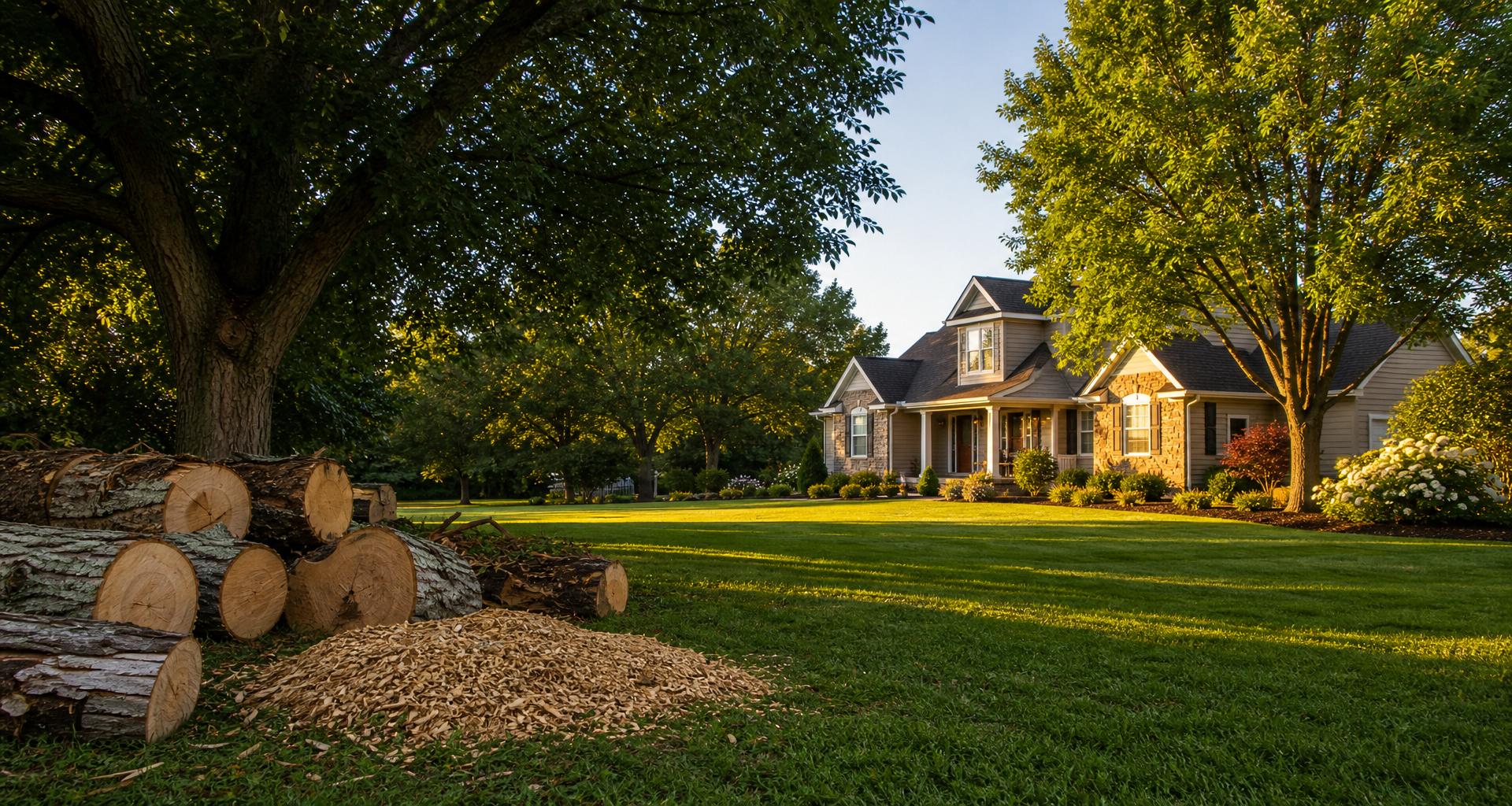
Modern removal is very different from the old 'topple it and hope' method. Our crew uses rigging lines, controlled rope lowering, and — where access is tight — crane-assisted lifts, so heavy sections never touch the roof, driveway, or fence. Every removal ends with a full ground cleanup, chipping of brush, and hauling of debris; firewood-length rounds are stacked wherever the homeowner wants them.

The best time to schedule removal is before it becomes an emergency call. Late winter and early spring — while the ground is firm and canopies are bare — give us the safest working conditions and typically the fairest pricing.

Services Free Quote
June 12, 20265 min read

Precision Trimming: How Proper Pruning Extends The Life Of Your Trees

Healthy trimming is subtractive art — the right cuts open sunlight, reduce wind load, and prevent expensive roof damage.

The single fastest way to age a mature tree prematurely is aggressive 'topping' — chopping the canopy back to stubs. It triggers stress sprouts, invites decay, and creates the weakly-attached branches that break in the next storm.

Proper structural pruning removes crossing limbs, deadwood, and weight from the outer canopy so the tree can breathe. Elevating the canopy over roofs, fences, and driveways keeps limbs from scraping shingles and prevents wildlife from using branches as an access ramp into your attic.

For most Ohio hardwoods, a professional trim every 3–5 years is enough to protect the tree and your structures. Storm-damaged limbs, however, should be assessed within a few days — an unstable branch tends to fail on the next big wind, not the one that damaged it.

Services Free Quote
May 30, 20264 min read

After The Storm: A 24-Hour Response Playbook For Ohio Homeowners

The hours after severe weather are when smart, calm decisions save the most money. Here's the order of operations our crew recommends.

First priority: safety, not speed. Assume any downed limb near a power line is energized and call the utility before approaching. Photograph everything — insurance adjusters expect date-stamped images of damage as it was, not after cleanup.

Second: triage. Split debris into three piles in your head — 'life-safety hazards,' 'structural risk,' and 'yard cleanup.' A leaning tree over the roof is category one; a cracked limb hanging over the driveway is category two; a lawn full of small branches is category three.

Overhaul's storm response fleet — chippers, saws, and a bucket truck — is staged specifically for the first two categories. We clear the immediate risks the same day when we can, then return for full-yard cleanup once the property is safe to move around.

Services Free Quote
May 14, 20265 min read

Ohio's Four-Season Property Care Calendar

Great yards aren't the product of one big spring cleanup — they're the result of small, well-timed passes through the whole year.

Spring: assess winter damage first. Check for split limbs, salt burn on shrubs, and drainage ruts. Get any structural pruning done before leaf-out so the tree's energy goes into recovery, not competing with new foliage.

Summer: focus on watering deep and infrequently for mature trees, and staying on top of fast-growing brush along fence lines. This is the season when unmaintained hedges quietly reclaim 6–12 inches of yard.

Fall: leaf and brush cleanup, gutter clearance, and canopy inspection before the first ice event. It's also the ideal season for major tree removal — frozen or firm ground protects your lawn from equipment.

Winter: monitor for ice loading and post-storm damage. Emergency pruning done during dormancy heals faster than mid-summer cuts.

Services Free Quote
April 28, 20264 min read

Reclaiming The Property Line: Why Overgrown Brush Is A Bigger Problem Than It Looks

Thick underbrush isn't just cosmetic — it harbors pests, shortens the life of fences, and hides real hazards.

Once brush along a property line goes untouched for two or three years, it stops being a lawn issue and becomes a structural one. Vines pull down fences. Volunteer saplings crack into concrete edging. Dense growth traps moisture against wood, accelerating rot.

Overhaul's approach is systematic: cut back to reveal the actual line, remove root balls where feasible, and haul everything off in a single pass. We finish with a clean, straight edge so mowing and future maintenance takes a fraction of the time.

Homeowners often find they've quietly lost several feet of usable yard to encroaching growth — reclaiming it is one of the highest-satisfaction jobs we run all year.

Services Free Quote
Fully Insured · 21+ Years

Ready to Protect Your Property? Talk to Josh Today.

Same-day quotes, honest pricing, and a spotless yard when we leave. Call now and speak directly with the owner — no call centers, no runaround.

Free On-Site Quote

Ready to knock this project off your list?

Call Josh directly for an immediate response, or send us the details and we'll follow up within one business day with a fair, no-pressure quote.

  • 21+
    Years
  • 24h
    Response
  • 5.0
    Google

Request a Quote

We reply within one business day.

Call 1 (937) 244-2017